

About SEN Labs
About SEN
SEN began the way most useful things do: as an itch that wouldn't go away.
I've been a computer nerd since my father brought home a Commodore 64. BeOS was love at first sight — that clean, coherent design that respected both the machine and the person using it. When BeOS quietly died, Haiku picked up the torch, and years later, watching Haiku mature, an old idea I'd carried around resurfaced: what if the desktop itself understood what your files meant — not just where they sat?
That idea became SEN — Semantic Extensions Native (pronounced like Zen, which is not an accident; the name nods to the Japanese thread running through the BeOS and Haiku community).
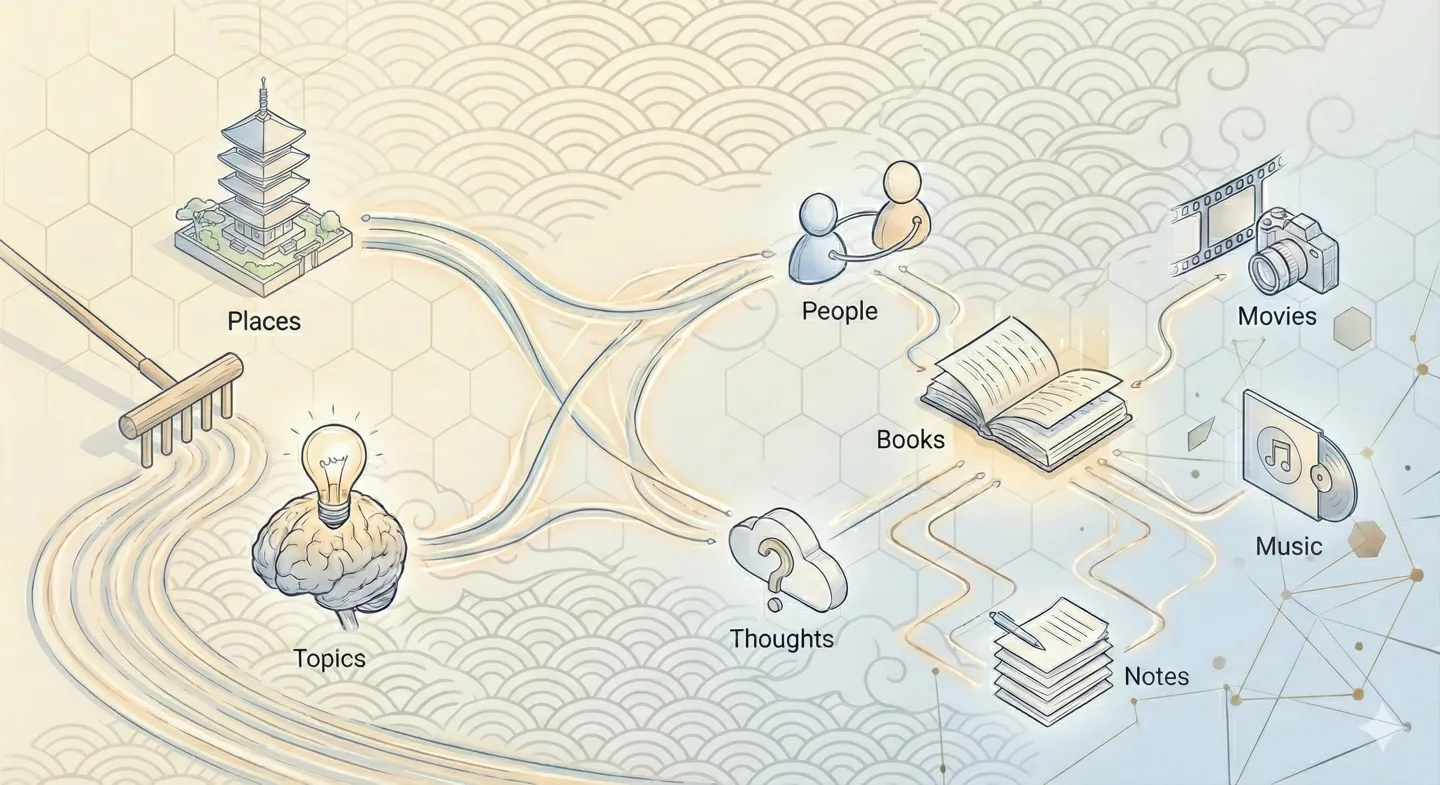
Why SEN
Your files know almost nothing about each other. A photo from a trip, the notes you took, the person you met, the place you stayed — five files, zero connections, unless you remember to make them and keep making them by hand. Every existing approach to fixing this has asked you to either leave the filesystem (a database, an app, a "second brain" tool) or learn something academic (formal ontologies, query languages) before you get any benefit.
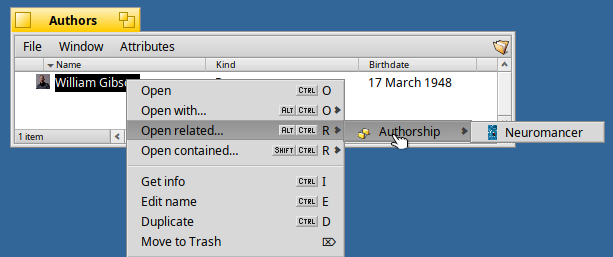
SEN takes a different route: it puts semantics directly into the filesystem, on Haiku, where files, relations, and metadata already live close to the metal. No external index to fall out of sync, no cloud service holding your knowledge hostage, no vendor lock-in. Native semantic links, typed relations, and rich metadata, navigable straight from the file browser you already use.
The hard problem: usability
Formal semantics has existed for decades. What's been missing isn't theory — it's a desktop that makes it usable by a normal human on a Tuesday. That was the real challenge behind SEN, and solving it — building UX that lets you navigate meaning between files and into their contents, intuitively, without touching a query language or an ontology editor — took the most work and the most iteration. I think we cracked it.
What SEN is made of
SEN is plugin-based and grows as an ecosystem rather than a single monolith:
- SEN Core — the semantic server integrated with Haiku's filesystem and loosely integrated apps like Tracker or Senity (see below)
- Sensei — Structure, Extraction, Navigation, Search, Enrichment, and Identification
- Senity — a minimalist semantic editor
- Shoji — a universal metadata and entity viewer/editor
- ONI — the Ontology Native Interface
- more plugins in progress, including AI-assisted enrichment where it genuinely earns its place — local, transparent, no hype
The principles
- Local-first, not offline-only. Your data works for you, connected through open standards, not locked into a platform.
- Open, always. MIT-licensed, developed in the open, documented as open research — findings, dead ends, and architecture decisions included.
- Data-centric. SEN is built so you can shape dynamic, data-driven views and interactions without writing an app for every use case.
Who's behind this
SEN is currently a one-person research project run out of Vienna, Austria, backed by three decades across biotech, insurance, financial systems, mobile, and formal semantics (ontologies, RDF, knowledge graphs) — and by a fairly stubborn conviction that the desktop can still be reinvented. If that resonates, I'd love your support, your feedback, or just your curiosity.

Follow the project on Bluesky · Code on Codeberg · Subscribe for updates
Join the discussion at the Onsen
Thoughts? Questions? The water is warm over at our community forum.
Open Discussion